3/19/2017

Konrad von Hochstaden. Statue with vague sense

In the Middle Ages, the Pope was one of the most influential person. He was so powerful that even managed to depose the emperors of the Holy Roman Empire, one of whom was forced to kneel in front of the pope and ask for forgiveness for his unrighteous actions. However, not only the popes of Rome stood out on the field of clerics, there were still individuals who left their trace in history. We will talk about one of them today.


  Mr. Konrad von Gochstaden was the son of the canon of the cathedral in Cologne, which our hero will rebuild at the zenith of his influence. Almost nothing is known about his childhood. It isn't even known authentically in which year he was born, in 1198 or 1205. However, already in 1216 he was appointed canon, and 10 years later the rector of the cathedral in Cologne. During the years of his ministry, he earned the reputation of an uncompromising and harsh man. In 1238 the archbishop of Cologne died, and the clergy of the cathedral elected Konrad in a short time. He immediately rolled up his sleeves, decided to take all this stuff into his own hands and entered into a series of skirmishes with neighboring secular rulers and aristocracy, who tried to prevent the cleric reigning alone in Cologne. In the end, he succeeded, the craftsmen raised their heads and took on some of the influence of the notable people, so the practically independent city moved under the authority of the church.

 In 1239, a new round of confrontation between secular power and Rome increased. Initially, our hero took a pro-imperial position, but then, for unclear reasons, he moved to the camp of the viceroy of God on the Earth. After the death of the former opponent of the pope, Emperor Frederick II, Konrad managed to appoint the Roman protege, Henry Raspe, the German king. And when the latter died six months later, Konrad placed on the throne another Pope's king - William of Holland. Among these clashes, the Cologne cleric was able to build something new. In 1248, he laid the new Cologne Cathedral, the construction of which stretched for several hundred years. This really impressive cathedral is one of the largest in Europe, and the German government have to spend a lot of money every year maintain it. By order of Mr. Gokhstaden 15 years later the cathedral in the neighboring city of Xanten was laid.

 
Soon the archbishop and the pope had a tiff. After the death of Archbishop Mainz, the public demanded of Konrad, gaining a serious weight, to be placed on this position, but the Pope decided that he would not reside in two important German provinces simultaneously, and then even deprived him of the title of papal legate in Germany. Following the deterioration in the relationship between the clergy, the relations between the archbishop and King Wilhelm also deteriorated. Von Gohstaden did not give up, and Wilhelm's death awaited him. In the election of the next German king, he sold his vote for a considerable sum of money to Richard Cornwallis, the brother of the King of England Henry III. As a result, Richard became king, and a couple of months later Konrad von Gokhtaden solemnly crowned him in Aachen.
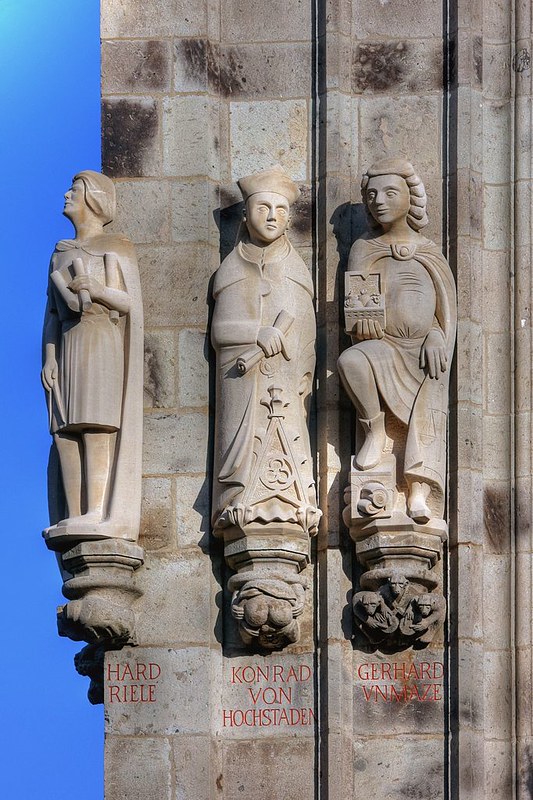

 In 1261 the archbishop died, and grateful townspeople decorated the town hall with a sculpture of him. The sculpture of Konrad stands on a balloon depicting autofellatio. Autofellatio is such an act when a man caresses his own penis with his mouth. What citizens wanted to say by this sculpture is unclear...

3/17/2017

Five the Most Interesting Blogs about History

Hello! Today I'm going to tell you about some wonderful blogs. Some of them I read and under some of them I'm even working. Besides I share with you an interesting information about some powerful blog platforms. So, it's high time to commence...

 
 The first blog platform is Weebly. The very flexible editor let you experiment with design and easily combine a post full of media information. This is a wonderful example of a blog implemented on this platform. The blog explains information about very wide rage of topics: from Islam to Haiti Revolution.

Another nice blog is Dreamwidth. The tool this blog offers are not very comprehensive. A quite simple design, but images and links are not difficult to add inside text. Here is an example of a nice blog that contains a lot of curious information, also concerning to history. This blog is written by a friend of mine, Alex Morz.

As you probably know, one of the most popular blog platform in the Internet is Wordpress. Actually, it is the most popular platform and everyone have seen it at least once. Default template of this blog is very modern, you can even don't find a better among free templates. I also have an account on Wordpress, so you can see and appreciate it yourself. An of course I cannot ignore this platform, Blogspot. I have alreade shared with you a wonderful historical resource. It is a blog posting every day information about this day in form of timeline. Enjoy reading every morning about the crucial moments occurred on the day.

As I have mentioned before, there is a little, but interesting project, Newsvine. A quite curious idea is about sharing information right among your community. history4.newsvine.com is an example of a column on this site, but it is only piece of information called there a seeds. An article is larger, but is allowed to post only to experienced users. But the greatest blog, as you know, is this very blog, which you are reading now.

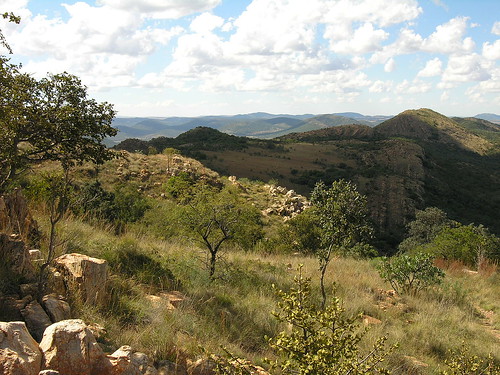
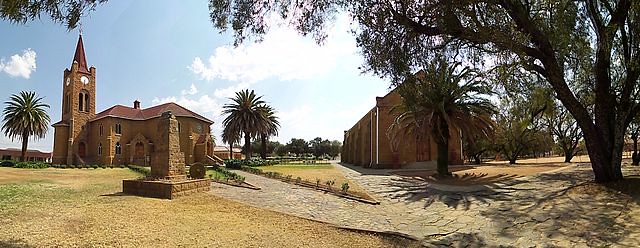
P.S. On the photo the city of Vredefort is taken, famous for its location inside of one of the largest craters in the World. But I am going to talk about it next time.

2/24/2017

About the Biggest Crater on the Earth

The largest, one of the oldest, one of the few multi-ringed impact craters on Earth. It's all about the crater Vredefort.
 

The Vredefort crater was formed about 2 billion years ago. For the most meticulous citizens, let's check, 2023 billion years. Life on Earth did not particularly boiling, the most complex organisms on the Earth were simple unicellular organisms. As you probably know, they don't have good memory and do not have their own manuscripts and there are not, therefore, eyewitnesses of it. This event occurred on the territory of modern South Africa, but this place wasn't Africa in that time and it was unlikely the South of it. For a billion years before the supercontinent Vaalbara split while other supercontinent, Rodinia, had not been formed yet. However, the event happened in the right place. A meteorite 10 kilometers in diameter sank right in Kaapvaal Craton, which is not particularly affected neither by plate tectonics or erosion. Most of the other similar craters creased beyond recognition and can only be found on other celestial bodies of the Solar System. For example, on Jupiter's moon Callisto, where you can see a wonderful multi-ring crater.

The crater has a few rings, the widest of which stretches for 300 kilometers in diameter. A hypothetical crater in Wilkes Land is a bit larger, but untill tractors do not remove all the snow from Antarctica, any reliable claims are not possible. In the center of the crater there is a hill, which arose from the splash of molten soil after the fall of the meteorite in the ground and drowned. So that the hole in the center of the Vredefort object, such as ones in the modern volcanos, is not presented. It is also nearly the oldest one, only crater Saharwi in Karelia is older among the known craters on Earth, but Saharwi is not so amusing.

In 1876, the descendants of Dutch settlers founded inside the crater a town konown as Vredefort, after which the geologic object was named. In addition to Vredefort two towns within the crater exist. The largest city in South Africa, Johannesburg, is located just on the external ring of the crater. In 2005, UNESCO declared the crater a World Heritage siteas "the largest, oldest and most deeply eroded meteorite crater found on Earth." As we know, not all of it is true.

This Day in History

Hello, everyone. I'm gonna today suggest you one wonderful blog.


On this blog you can read every day the list of the most important event that occurred on this day on the past. For example, information about the 25th of February, you can find here. Enjoy reading a fresh lavish post every day!

2/11/2017

History of Ethiopia Explained

I think it's high time to talk about Ethiopian Empire. Usually people ignore African history, but today I'm going to set a precedent.

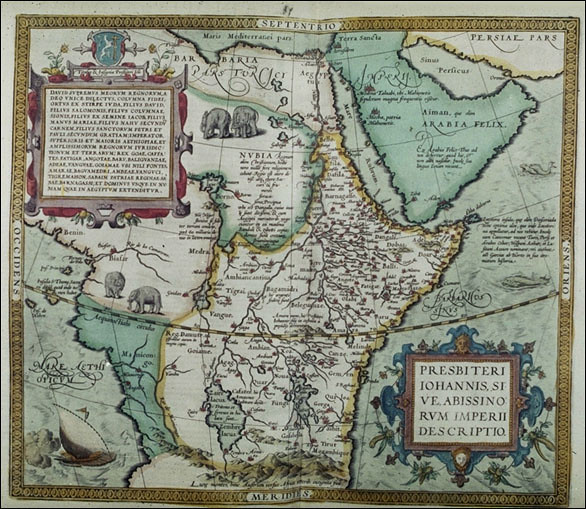
So, a short account about Ethiopia... I suggest visiting a wondering resource if you want to know more about history of Ethiopia. Eastern Africa is considered the origin of Homo sapiens, thus people were moving around the Eastern Africa a long time ago. They even spread from here across the world. The Ancient Egyptians also visited this place and called it Punt, or Golden land. The earliest Ancient Ethiopian state, known as Aksum kingdom, was formed in the 1st century. This state became one of the first ones that adopted Christianity. Ethiopian Orthodox Church was founded in 4th century, about 6 centuries earlier than Northern and Eastern Europe did it. In the end of 11th century cruel queen of Ethiopian Jews, who were expelled after new Christians asked them to leave their territory, occupied Ethiopia and held it with her successor about 40 years.


It became the turning point in the history of Ethiopia. One guy decided to overthrow one more time the Jews to establish their own dynasty, but for security reasons he married the heiress of the previous king. The name of this guy was Mara Takla Haymanot. This event is considered the foundation of Ethiopian Empire, which lasted until 1974. It's interesting, that the time of this event occurred is unclear, and two dates are suggested: 937 or 1137. Impressive difference. This gentleman did the city of Lalibela his capital, which left us a fewrock-cut churches and Christian cross made from a single piece of metal.

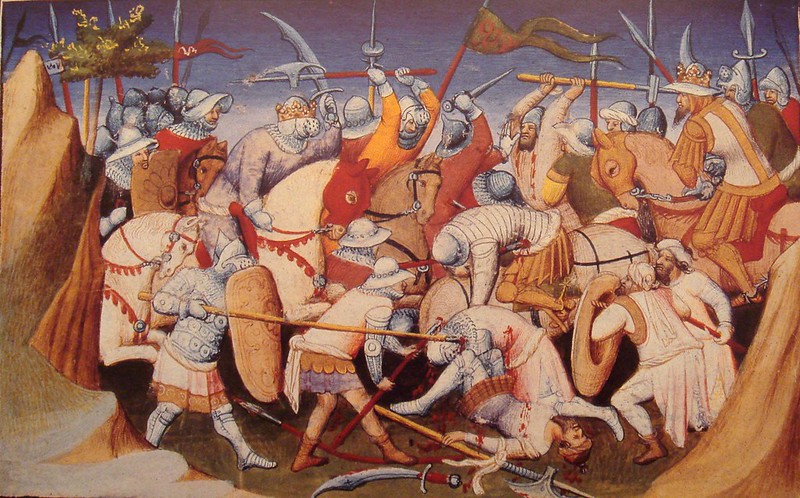
In 1270 next guy raised, and claimed that he was a descendant of King Solomon, the legendary ruler of the Ancient kingdom of Israel, therefore he he is in charge. This fellow was a native of the people called Habesha. For this people Ethiopia gained its name by which it was known for centuries - Abyssinia. Solomon dynasty ruled Ethiopia for major part of its history, from 1270 to 1974, during which it successfully resisted the Arab, Turkish and European invasion. So, from 1529 to 1543 it successfully fought against the neighboring sultanate of Adal, which occupied Abyssinia for a little while, and in one of the battle of the wars emperor David II was killed. In 1636, Emperor Fasilides founded a new capital of the state - Gondar, which left us several interesting structures.

Since year 1769 a period of disintegration of the state began, when small lords were fighting each other, and the power of the emperor became extremely weak. This troubles continued until the beginning of the reign of the Emperor Tewodro II, who managed to consolidate Ethiopia. Soon, however, during a storm Magdala castle by the British troops, the poor man was forced to shoot himself with a gun presented to him by Queen Victoria.


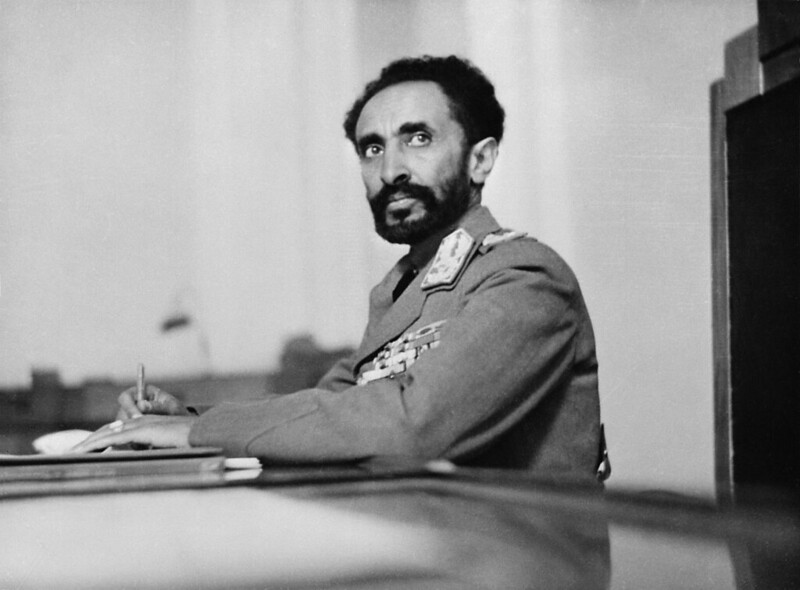
Further, The state of Italy entered the Scramble for Africa, starting a long epic war against Ethiopia. In 1889 the Italian signed a treaty with Emperor Menelik II, however, each party understood it in their own way since of the wrong translation of the word "may" in the agreement as "must". In 1895, Italy dared to attack Ethiopia, but the Battle of Adwa resulted in the former's crushing defeat, securing the first victory of an African state in a war against Europe. In the World War II, forces of the British Empire expelled the Italians out of Africa and returned Haile Selassie I, who would rule the country for other 30 years, to his homeland. By the way Rastafarians worship Haile Selassie I as god and see him as the second coming of Christ.

In 1974, the commie reached Africa... Marxist-Leninist junta supported by Soviet Union again overthrew Haile Selassie, and imprisoned him in jail, where he died shortly thereafter. Further, as communist were using to do, they abolished the monarchy and plunge Ethiopia into the civil war.

2/10/2017

The Victory of Excitement

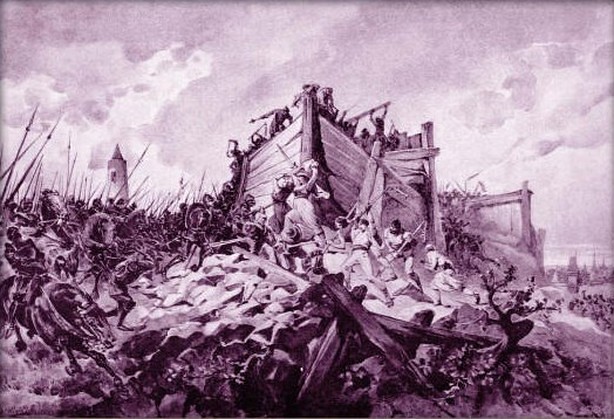
One of the most interesting pages in history of Czech Republic is Hussite wars. For me it's curious that little army of Czech rebels could resist a huge alliance of Holy Roman Emperor and his vassals, especially they archived the impressive success at Vitkov Hill, near Prague.

Hussite wars has religious reason. Bohemia, the name of about of half modern territory of Czech Republic, was mostly Protestant country, as well as some of northern states in Germany. Some years before these events one of the most notable persons went to the European stage. His name was Jan Hus. He tried to reform Catholic church, which had many internal problems. To solve economic problems papacy solt indulgences, which could devalue buyer's sins, even if he had not done any sin yet. So everyone could buy indulgence in advance. Three Popes tried to rule the Western church simultaneously, while one of them was former pirate. To restore the order Holy Roman Emperor Sigismund gathered the Council of Constance. During the discusses the Emperor decided to invite to Hus to talk to him. But it was a trap. Hus was seized and burned at a stake.

This events excited the Czechs to decisive actions. They threw the judge and burgomaster, who were catholic, out of the window of the New Town Hall, which became known as Defenestration of Prague. It is purely Czech term, and they made Defenestration twice. The second happened in two centuries, triggering the Thirty Years' War in Europe. Surprisingly, this home guard managed to resist the forces, gathered by Sigismund. Actually the most of engagements happened near Prague. Empire attempted to beat Hussites in five crusaded, but only due to internal dissension among Hussites the final crusade was successful. But the Czechs took some advantages from treaty with emperor. In hundred years the Reformation stated in Europe, and the face of Christianity changed for ever.

11/25/2016

Some Cool Online Services


Hello. Do you remember what we talk last time about? Yes, about the first Emperor of Haity Dessalines. Today I want to share some nice resources and a bit of information on them about our hero. You are already familiar with some of this resources, some of them are new. So let's commence...
  • The first site is Newsvine. It is some kind of bookmard service. Here is an example of sharing your source on it.
  • Next one is Classicalplace. This resource was created as social network for musicians and fans of classical music, but on your account you have own blog in which you can go out of sphere of music. See here how it looks.
  • The next resource is well-known blog Wordpress. Is is absolutely free and very handy tool to post your articals. Look how great is it with default theme.
  • Instapaper is a service that represents any page in the Interent for you in so called quite format. Only content, no sidebars and advertisement. Read pages piecefully and silently.
  • Apsense is a good social network. Here you can conntct to other people, share information with them, post an artical and start a blog.
  • Folkd is online service similar to reddit and so on. Here you post a link, other people vote for it and the best ones raise on rating to get good visibility. You can find links for appropriate topic, for example about our favourite
  • And at last but no at least your favorit Pinterest. Here see fine set of pictures linked with Haitian Revolution and mister Dessalines. By the way, one of these pictures you can see at the top of the page.