Показаны сообщения с ярлыком Middle Ages. Показать все сообщения

4/06/2018

History of Rashidun Caliphate Explained

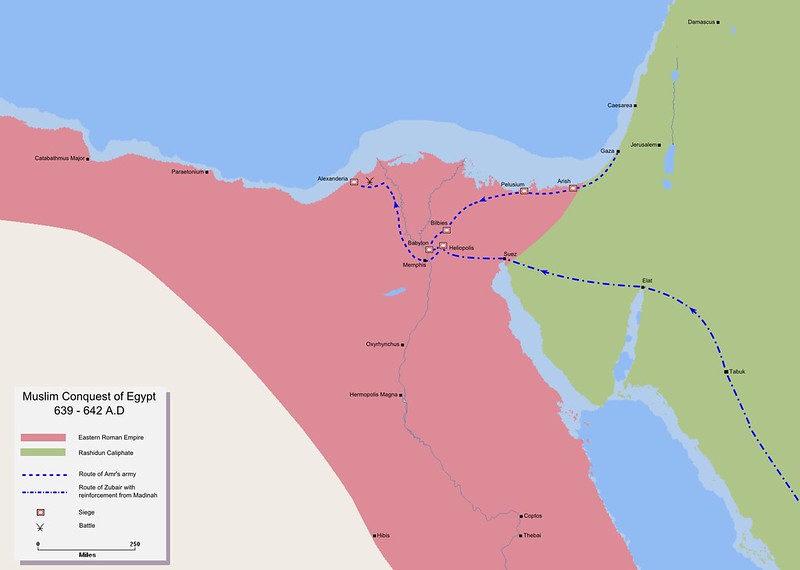
 One of the most interesting point in the expansion of Muslim world is the rapidity of this spread. In the first years of new religion, when Muhammad was still alive, the Arabian peoples were ones who bowed different things. Some state that the bowing of the Kaaba, the cube on the square in Mecca, which everyone Muslim should see, goes back to the very pagan times, when the people on the Arabian Peninsula bowed sun and moon. That time these tribes inhabited generally in the south of the Arabian Peninsula, got quickly arranged, moving to a new step of development and starting a newborn emprire - the Caliphate, and for several years subjugated immense lands on 3 mainlands. Initially it looks all things was easy and smooth, but if you stare at it, you will have a different situation.

The roots of this huge state originated with the death of the Prophet, who started a new religion - Islam. The first stage of the Caliphate was Rashidun Caliphate. Islamic peoples think this period lasted the reign of the early five rulers, although it is not obvious why the Caliphs are "Rashidun righteous" than others. Just after Muhammad, the following Caliph Abu Bakr had to face the troubles. New religion has not had time to sit confidently in the heads of the Arabic tribes so some of them started to move towards new living prophets. About each family had a preacher, who this peoples were going to listen to. Is seems if there would not be Muhammad, Muhammad's post was aimed by some other competitors, and nobody can guess how would be look the Arabic states, if the role of Muhammad was replaced by any of these rivals. The first Caliph was managed to stop disagreement and dispose one tribe after another. After tree years of wars, Abu Bakr bequeathed the place of the ruler to his friend Umar. This fellow is known for a number of politic and judicial reforms. This guy set up a kind of the Accounting Chamber, and some kind of pariament. While Umar's rule the Koran was eventually composed and the Islamic calendar, started since the Muhammad's migration from Mecca to Medina, was intoduced. He had to fight with local apostates, but Umar was managed to dramatically extended the lands of the state. It seems that just because of his lively aggressive career, the guy was murdered by a slave while praying.
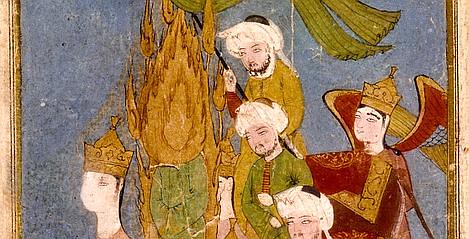

Next ruler, Uthman, was killed as well. In Uthman's 12-years-long reign opposition sentiments against Uthman raised. After some engagements the opposition of the ruler invaded to his home and killed Caliph while he was studing the Koran. Usman's supporters, in turn, determined to avenge for slain of the Caliph and murdered about four thousand opponents. The next ruler start military engagement with them, which today called the battle of Camel. In a little while the new caliph was murdered by opponents disliked the crack in the Islamic society. After that Muawiya, new ruler of Caliphate, left the post to his son, thus disestablished the Rashidun Caliphate and establishing the next state. We will talk about this state in one of future posts.

1/03/2018

History of Brittany Explaned

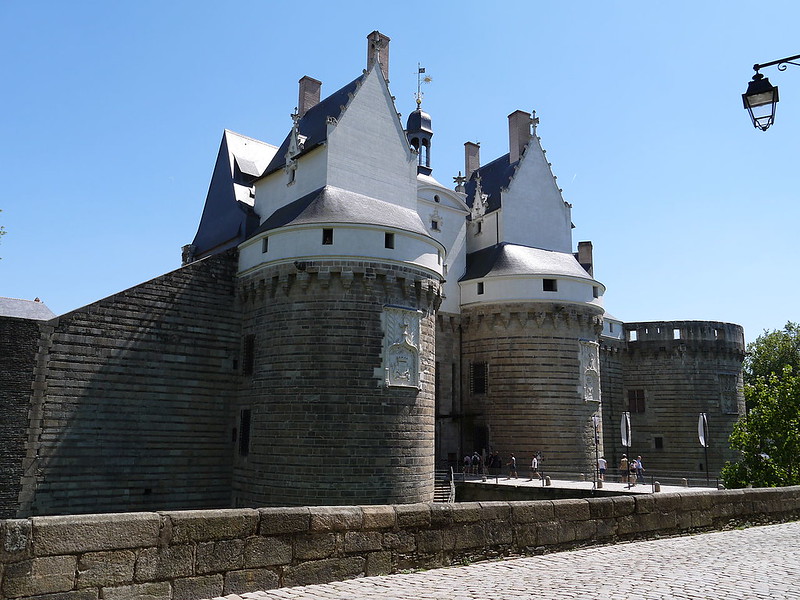
Bretons... If anyone does not know, that people belongs to the Celts. At first glance the people inhabited in the British Isles, but they were pressed by the Angles and Saxons there. In the period of the great migration German people migrated massively where one's feet would take one, and one of these places were the British Isles. It is why the unlucky delegation of the Celtic population had to move across the Channel to the mainland. There fellows occupied vast territories along the strait. The next wave of migration to the continent occurred in the 9th century and the fellows were already the baptized Brits. That time laid a legend of several Celtic saints. After the borders of feudal Europe began to be drawn in the Middle Ages, Brittany became divided into some kingdoms: Domnonee, Cornouai, and Bro Waroc'h. Two former were named after the territories, from where the people inhabiting this lands came, and the third was named in honor of one stern fellow, a leader of the Bretons that time.
These some provinces were subsequently united into the Duchy of Brittany. This duchy was located near the Norman duchy, so during the Norman conquest of England, the Bretons took a direct part in the campaign of William the Conqueror. And after the conquest, many of the Bretons received bonuses and presents in the form of rich land allotments and every sorts of titles. In 1166, the Duchy of Brittany became the issue of a dispute among some great powers such as England and Kingdom of France, and shortly after lost its sovereignty. In the 14th century, the Duchy of Brittany regained its sovereignty, but still attracted great interest from outside its borders.

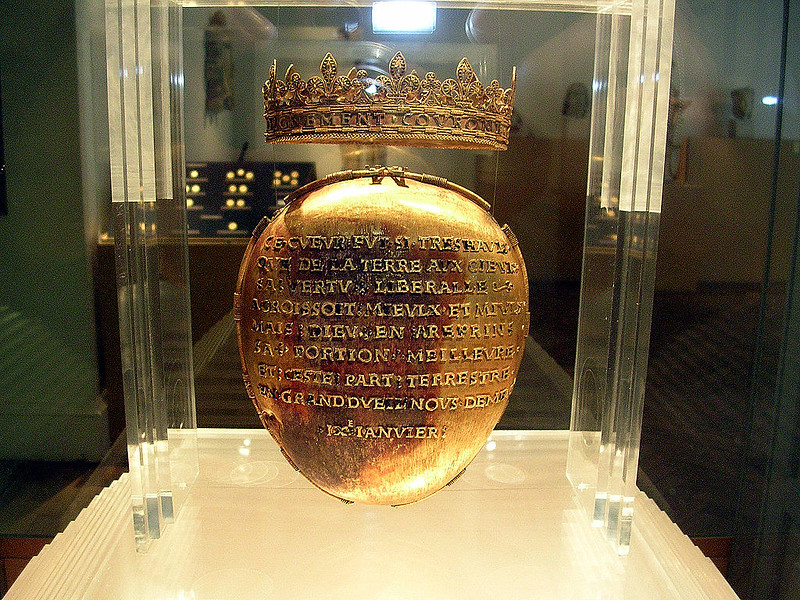
Anna of Brittany, who received her post of duchess in 1488, became the last ruler of the independent Brittany. Despite the peace agreement, signed by the ruler of England Henry VII and German emperor Maximilian I to aid the duchy, the French king Charles VIII forced Anna to marry him, taking all the land of Brittany. After his sudden death, Anna quickly proclaimed the sovereignty of the duchy, but shortly after was forced to marry the next French ruler, Louis XII. After her death, provoked by kidney stones, her heart was transferred to the chapel of Nantes, and the duchy lost all hope of regaining the sovereignty.

12/26/2017

Carolingian Renaissance

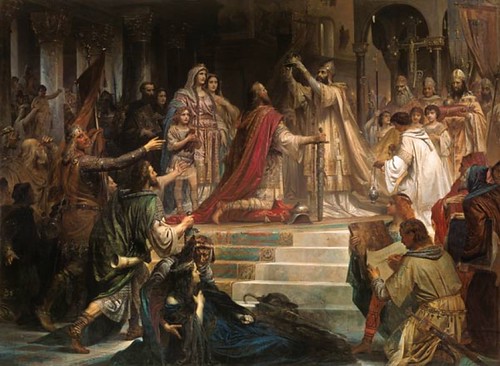
Hello, everyone! How long I did not post a string here... But today I want to touch a very important topic in World culture, Carolingian Renaissance... If you search the Internet for information on this issue, you can stumble upon the enumeration of the most epic moments in the life of Charlemagne, similar to his private life and feats: coronation by the pope in Rome or the conquest of the Saxons. But, revival is a cultural phenomenon and it refers to military and political spheres only indirectly. Also, despite the fact that the period is named after this successful and prominent ruler of the Frankish state, the period did not end with the death of Charlemagne, but continued for more than half a century. This period was claimed the Renaissance only in 20th century, before it was believed that the whole history of the middle ages until the Italian Renaissance was completely dark ages a a wild time. But looking closer, several scientists saw a gap in the clouds.


Pope Leo III crowns Frankish king Charlemagne Emperor of West

What was the reason for this cultural gap happened? First, after conquering vast territories, Frankish rulers needed an educated administration in different pieces of the empire to manage these very lands. But after Dark Ages, this was a difficult thing to find them. Secondly, the classical Latin, which was that time an international language, began to come in decline in France. It became harder and harder to maintain communication with the pope. Simultaneously, Latin in France gradually became a Frankish dialect. To remedy the situation, Charlemagne decided to organize something like an academy in his palace and invited the most prominent theologians from Europe, such as Alcuin from the British York or Paul Diacon from Italy and so on.

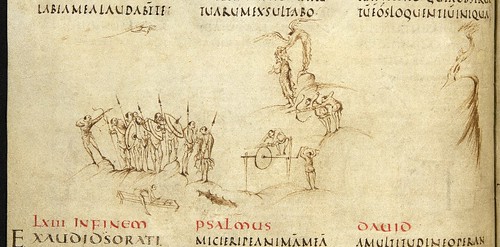
Detail of the Utrecht Psalter, a masterpiece of Carolingian art

First of all, the Carolingian revival is characterized by the appearance of several hot medieval miniatures. For example, in Utrecht Psalter there are as many as 166 pictures depicting every kind of chants, musical instruments and cleric’s subjects. Naturally, this cultural breakthrough was connected with the clerics: the manuscripts were made by monks, miniatures depict the life of monasteries and saints, architectural trends were implemented in churches and monasteries, music was mostly monotonous Gregorian singing. A list of the most notable works of the era can be seen here. But, there was interest to the ancient manuscripts as well, and it was early time since ancient times. No one century, from the fourth to the fourteenth, was characterized by so many rewritten ancient manuscripts. Even the description of ancient pagan rituals and beliefs did not bother the clerics.

Revival showed itself not alone in the field of art. Charlemagne decided to carry out monetary and legislative reforms as well and even succeeded in it. In general, politically and culturally, Europe that time was even more integrated than currently, IMHO.